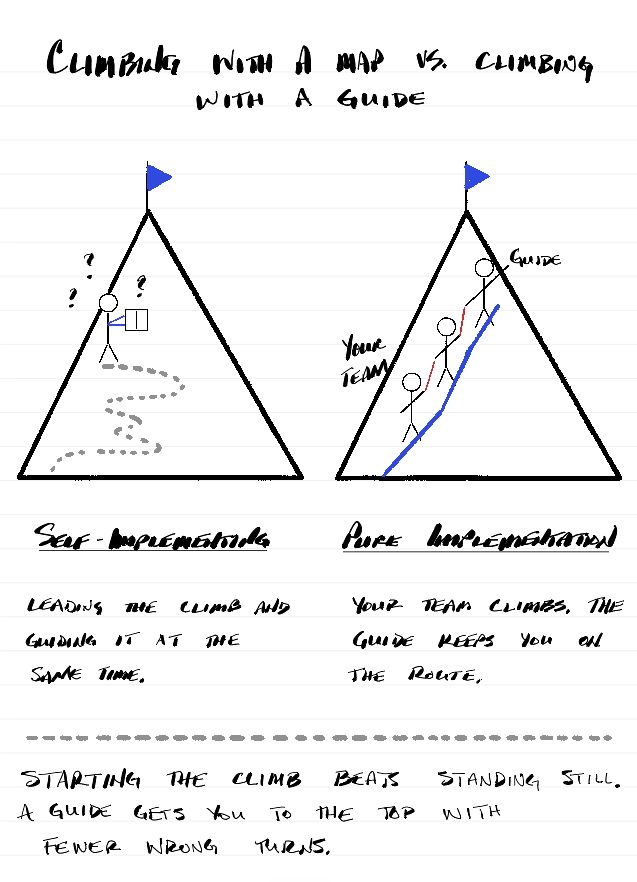
Hand-drawn sketch comparing climbing with a map and climbing with a guide

A Map or a Guide

I have a lot of respect for leadership teams that self-implement EOS.

They read Traction, start a Level 10 meeting, build a scorecard, and set their first rocks. That takes real initiative and it beats running a business on gut feel and hope.

But after working with a lot of leadership teams, I’ve noticed a pattern: self-implementing can quietly create a few problems:

  1. The person running the process is also a player in it. It’s hard to facilitate an honest IDS when you hold the strongest opinion in the room.
  2. The tools get adopted but not mastered. A scorecard no one trusts, or rocks that roll over every quarter, can convince a team that EOS doesn’t work for us. Usually it’s not the system, its how it was installed.
  3. The hard people conversation stays buried. Right Person, Right Seat is tough to address when the person leading it sits on the same team.

Pure implementation changes one big thing: the leader gets to be a full participant and an outside guide runs the process, holds everyone accountable (including the visionary), and pushes on the issues nobody wants to raise.

It’s the difference between climbing with a map and climbing with a guide. Both can get you up the mountain. One gets you there with fewer wrong turns and a lot less frustration.

If you’re self-implementing and feel stuck, you’re not doing it wrong. You may just be ready for a guide.
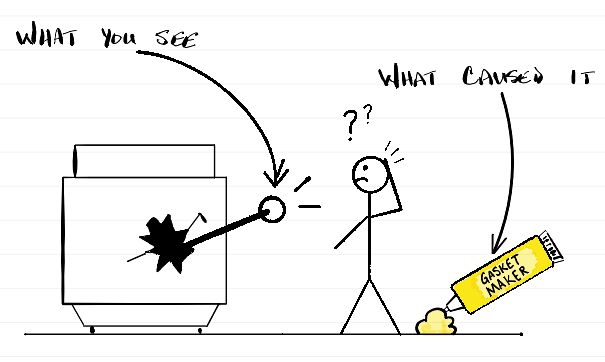
Hand-drawn sketch of a failed engine part and its hidden cause

The Part That Failed

In my Caterpillar Dealer days I spent a lot of time on failure analysis. One I remember was a connecting rod sticking out the side of the block. The cause turned out to be excess gasket maker that clogged an oil passage. We had to answer a lot of questions before we got there.

What I learned is that the part that failed was usually not the cause. You started with the damage and kept asking what happened right before it. Each answer led you one step further back. Almost every time, the trail ended at something small and early, like a step in assembly that nobody was checking.

Leadership teams have the same problem. When an issue keeps coming back, keep asking why until you find the step nobody owns. Then assign it to one person.

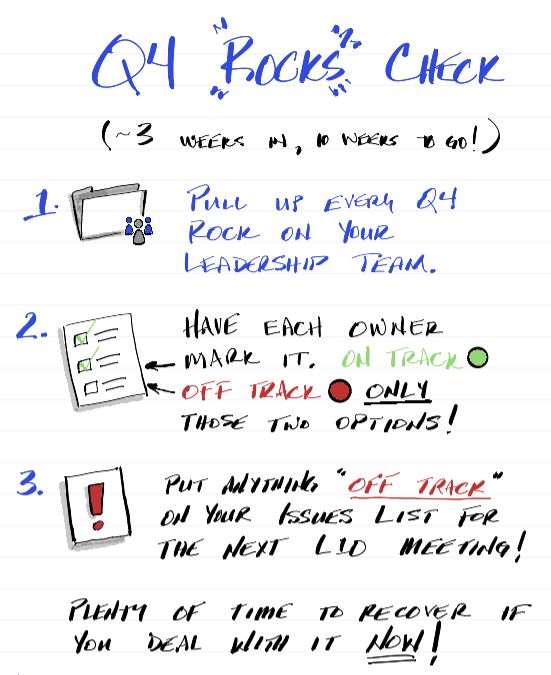
Hand-drawn Q4 Rocks Check sketch

Q4 Rocks Check

Q4 ROCKS CHECK

We’re about three weeks into Q4, which makes this a good week to check your quarterly goals. In EOS we call them Rocks. They’re the handful of priorities each person commits to finishing in the next 90 days. Here’s what I’d do.

  1. Pull up every Rock on the leadership team.
  2. Have each owner mark it on track or off track. Only those two options.
  3. Anything off track goes on the Issues List for your next Level 10 meeting.

There are roughly ten weeks left in the quarter. That’s enough time to recover a Rock if the team deals with it now. It usually isnt enough if you wait until week ten.